[I’ll update this blog post once I’m done writing a more well-researched, fully-developed idea. This is a preliminary version of the original blog.]
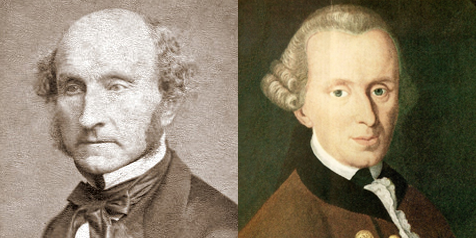
Last year while teaching us about John Stuart Mill’s philosophy, Professor Karl emphasized how it’s okay to reject Mill’s Harm Principle. Harm principle, in theory, appears to be a very safe and reliable philosophy to subscribe to. However, it has its own pitfalls, with a common objection being the helmet example. The harm principle disallows any interference unless an individual’s action can harm someone else in any way. Thus, if we follow the harm principle, we cannot force anyone to wear a helmet, since, if they die in a road accident, they’re only harming themselves and not anybody else.
While writing the final essay exam for the course, I came up with an idea that synthesizes Kant’s justification for the existence of government and Mill’s harm principle. Kant rectified the social contract theory by stating that we do not need literal consent of everyone for a government to be legitimate. Instead, we need the hypothetical consent of all rational and well-informed people - people who have a good grasp of how the world functions. Yes, some people may not be reasonable enough, and as such, the contract should be written in such a manner that no rational and reasonable person would reject it.
You’d then create a state which all the rational people consented to, and people who are not “rational” enough would be considered signatories — their “rational-self” signed the contract. Now, we can extend this idea to Mill’s harm principle, specifically to the helmet example. We can say that there can be an intervention if all the rational people would hypothetically consent that a particular act (such as not wearing helmet) is enormously risky, dangerous and life-threatening. While it might appear as though we’re infringing their liberty—which is what the harm principle hopes to avoid—we’re saving their liberty in the long-run: it’s better than dying and not having liberty nevermore.
Of course, Kant’s addition to the social contract theory has its own faults: ‘Who decides who’s rational? What’s considered well-informed? What is reasonable?’ and so on. While these are extremely valid questions, I think that in general, a Kantian approach could be considered a good defense of the harm principle with regards to the helmet-objection thrown at it.